This article was originally written in the aftermath of the far-right rallies on the 27th September 2025. Very little has changed in recent months, and the points raised in this article continue to be relevant.
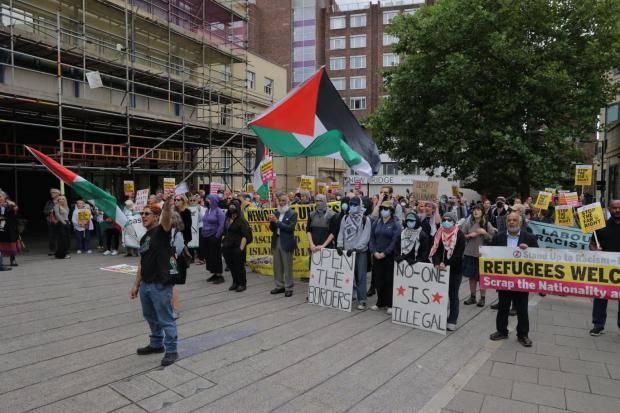
The recent months have seen an upsurge in unified action amongst the political left in Newcastle, particularly in response to the marches and demonstrations of the far right. These counter demonstrations have generally been well attended, with the far right being outnumbered for the majority of major actions. However, disunity and liberal elements within the ranks of the counter demonstrators have led to the normalisation of several forms of bad practice, this often undermines the effectiveness of counter-demonstrations against both the fascists and the police force that intervenes to defend the interests of the state. The aim of this bulletin is to discourage these mistakes and ensure good practice amongst our ranks. This is by no means an exhaustive list of errors made by the left, but is intended to serve as an analysis of the most common and easily avoidable mistakes made.
Section 1- Anti face-covering sentiment.
The fight against fascism always carries a degree of risk with it, by fighting fascism we all accept that there is a chance we may face injuries or arrest. This does not mean that we shouldn’t act to decrease the risks to ourselves where possible. Many anti-fascists choose to wear face coverings to obscure their identity. This reduces the risk of being photographed by fascists, who are known to doxx counter demonstrators, and the police, who may choose to track and arrest radical elements after action has been taken. By wearing a mask you not only protect yourself, you also allow your comrades to blend in with the general mass of people, decreasing their risk of being identified. This is not to mention decreasing the risk of illness to immunocompromised people. Unfortunately, many so-called anti-fascists, particularly those from the ‘activist scene’ not only refuse to wear masks, but commit the much more egregious sin of demanding others also de-mask. This puts everyone at unnecessary risk, for no good reason. There are no solid arguments as to why wearing masks should be discouraged- the most common one presented being that which places optics over safety. Ideally, everyone who is able to should wear a face covering, whether that be a simple medical face mask, a Keffiyeh, or anything else available. Medical face masks are readily available and often distributed on the day. If however, you are unable to wear a face covering, for whatever reason, it is vital that you do not discourage others from acting in the interests of the safety of us all.
In addition to masking, many people also choose to wear either grey or black block to mobilisations. Grey bloc consists of civilian wear that is hard to distinguish from the rest of a crowd. Black bloc involves wearing fully black clothing, often with sunglasses and other wear to ensure we are completely unidentifiable. Black bloc is generally more secure as part of a larger group, but grey bloc can be worn after actions are taken and eases our dispersal into the general public. The choice of which form of bloc to use depends on the risk of the action taken and should be decided on a case by case basis, with black bloc being favoured for larger mobilisations where it is easier to blend into a crowd in bloc. In both cases, wearing bloc also allows people to remove a layer of clothes after engagements with the police and far right, allowing us to blend in with the general public where necessary and lowering the risk of reprisals for our actions. Beyond this, the logic of wearing bloc is much the same as the logic of masking up- it makes it harder for our adversaries to identify us!
Section 2- Usage of phones
The best way to ensure that your phone does not compromise your safety is to avoid taking it with you in the first place. However, this is not always possible for people, especially considering how reliant many are on phones for communication. If you are planning to take a phone with you, there are several steps you should take to reduce your risk of being identified by the state:
- Disable biometrics: the police are authorised and have been known to use biometrics to forcefully unlock devices. They cannot force you to enter a password or PIN without written permission from a judge.
- Disable message previews: If the police get their hands on your phone, they may not even have to unlock your device to read your messages. Message previews allow reading messages from the Lock Screen. We don’t want to make the state’s job too easy- disable this option!
- Use secure messaging channels: obviously no channel is perfectly secure but there are better and worse choices. The best well-known option is Signal, which uses more advanced encryption methods and collects less personal information than other messaging services, such as WhatsApp.
- Disable location tracking: The drawbacks of giving the state your location should be obvious. Ensure that you not only disable location services, but also disable location tracking permissions on all apps. Be aware that airplane mode alone is not sufficient to hide your location! For those unfamiliar with the area, consider use of a paper map, rather than navigation services.
Although not strictly necessary for lower risk action, using a Faraday cage/bag is another good method of ensuring security. This ensures all signals from your phone are blocked, and is more effective than simply turning your phone off. There is no zero risk way to carry a phone during these actions, but there are certainly ways to reduce these risks!
Section 3- Cooperation with the police
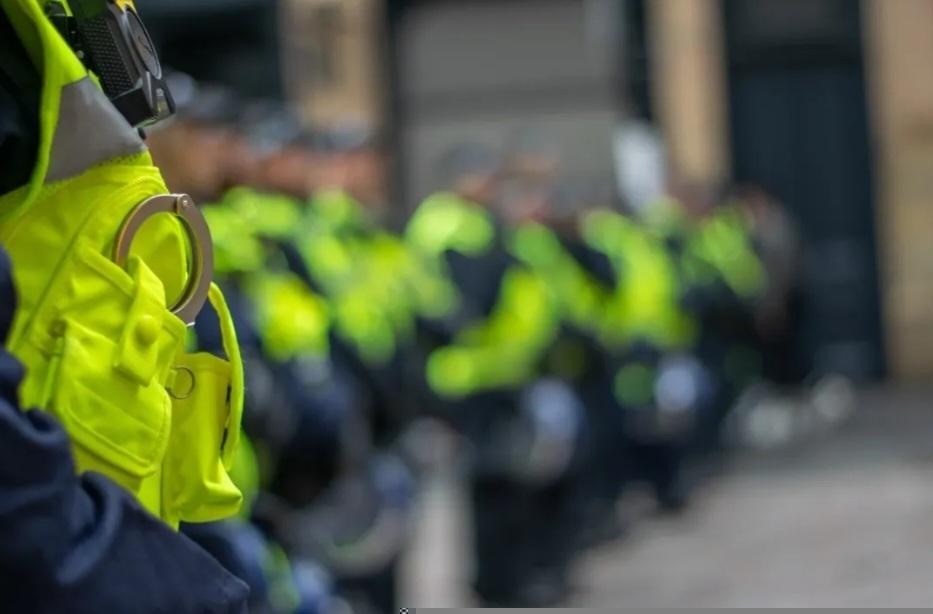
The police are not your friends. They exist as an organisation in order to protect the stability and interests of the bourgeois state, interests which diametrically oppose our own. Despite this, many people will not only refuse to physically impede the actions of the cops but will strike up conversation with the police officers who are sent to keep us under control. It must be made eminently clear- there is no such thing as a harmless conversation with the cops! They are not there to socialise, they are there to do their jobs and anything you tell them will make those jobs easier. Even by socialising in general, you have shown yourself to not be a threat to the police, allowing them to concentrate on other elements of the crowd. Giving tactical information of any nature to the police is even less advisable, and will allow the police to plan around our actions. These people often claim that they will simply not disclose anything of importance at all, but it is all too easy to accidentally slip up when talking to an ostensibly friendly face. You can eliminate any risk of this happening by simply not responding to the police in any way, shape or form. In almost all actions where the police are likely to be present, someone will communicate the limited circumstances in which you must talk to cops, take heed of this! Carry a bust card, know your rights, and ensure you know the phone number of local protest lawyers. Do not communicate with the pigs anymore than absolutely necessary!
Conclusion
It would appear pertinent to end this analysis with an observation. It is clear that the following years will clearly be ones of increased strife and conflict both globally and locally. Every day, the fascists, once disunited and generally aimless in their long term strategy, become more and more organised. Their security practices are growing more sophisticated and they are becoming ever more radical and numerous. The state also becomes ever more aware, and ever more heavy handed in its response to us. In these conditions, any blunders will be punished more and more severely, it is therefore vital that we all ensure we are acting in the safest, most secure way possible. Solving these problems will not be enough, but it is an important first step that must be taken. We should remember that we have a world to win, but we must be prepared to seize it when the time comes.